Industrial real estate has become one of the most sought-after asset classes in commercial real estate. From logistics hubs and distribution centers to manufacturing facilities and flex industrial buildings, industrial properties attract a wide range of buyers, including private investors, institutional funds, owner-users, and real estate private equity firms. Understanding what industrial property buyers look for is critical for sellers who want to position their asset correctly and maximize value.
While every buyer has unique investment criteria, most industrial property buyers focus on a consistent set of fundamentals. These factors directly influence pricing, demand, and long-term performance.
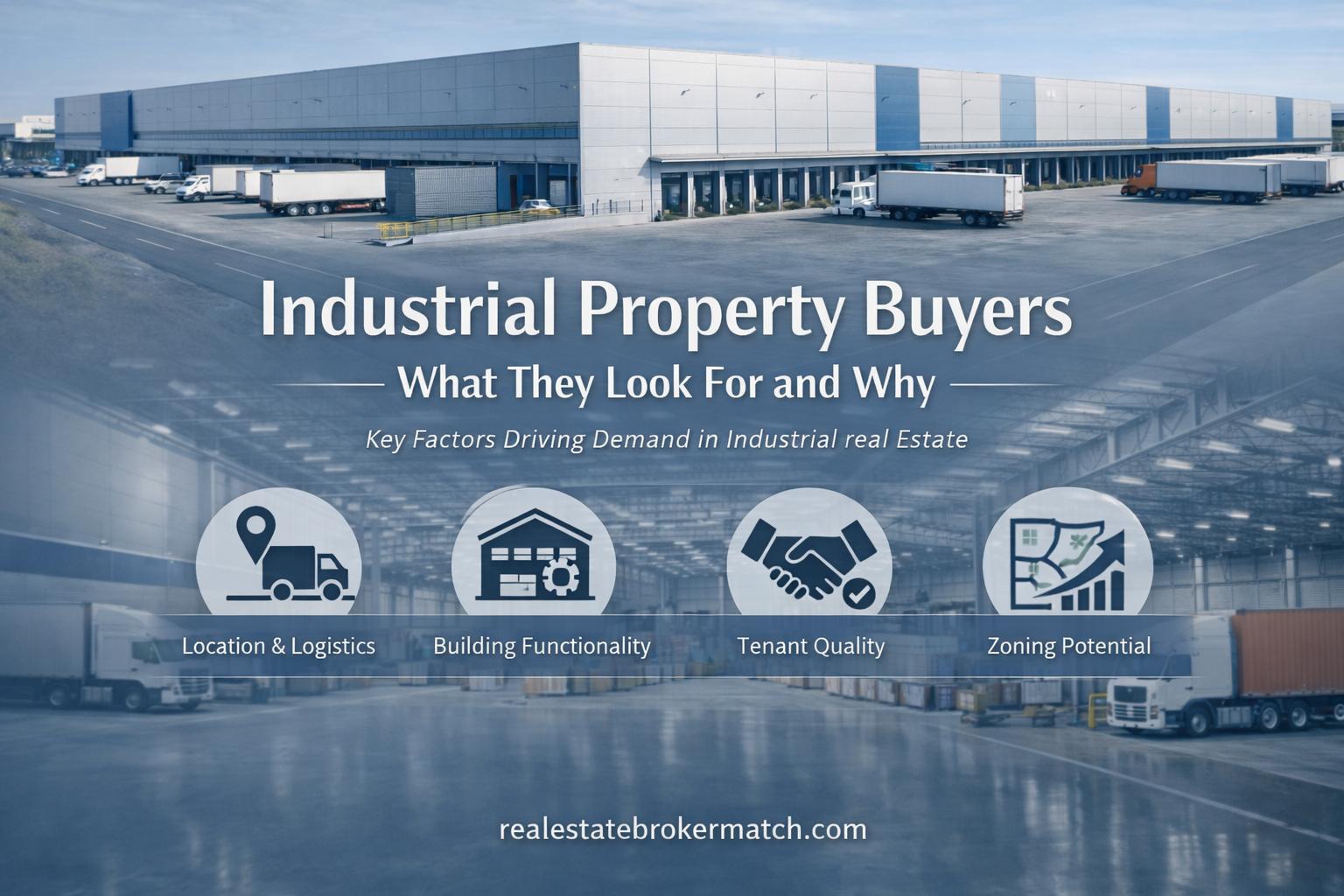
Location and Market Access
Location is one of the most important factors industrial buyers evaluate. Unlike retail or office properties that prioritize foot traffic or prestige addresses, industrial real estate is driven by efficiency and access.
Buyers look for proximity to major highways, interstates, rail lines, ports, and airports. Easy access to transportation infrastructure reduces delivery times, lowers operating costs, and improves tenant demand. Properties located near population centers and major distribution corridors tend to command stronger rents and lower vacancy rates.
Market fundamentals also matter. Buyers analyze local industrial supply and demand, absorption trends, vacancy rates, and future development pipelines. Markets with limited new supply and strong tenant demand are especially attractive to long-term investors.
Building Size, Layout, and Functionality
Industrial buyers care deeply about how a building functions. Ceiling height, column spacing, loading capabilities, and floor load capacity all influence a property’s usability and marketability.
Modern industrial tenants often require higher clear heights, multiple dock high doors, and ample trailer parking. Buildings that can accommodate a variety of users are more appealing to buyers because they reduce leasing risk and improve exit options.
Flexibility is key. Buyers prefer properties that can easily be adapted for different tenants or uses without significant capital expenditures. Functional obsolescence is a major concern in industrial real estate, especially for older assets that no longer meet modern logistics or manufacturing standards.
Tenant Quality and Lease Structure
For leased industrial properties, tenant quality is one of the primary drivers of value. Buyers analyze tenant credit strength, business stability, and industry exposure. National and regional tenants with strong balance sheets typically attract the most competitive pricing.
Lease terms matter just as much as tenant quality. Buyers favor longer lease terms with built-in rent escalations, minimal landlord responsibilities, and clear renewal options. Net leases and modified gross leases are especially attractive because they provide predictable cash flow and limit operating expense exposure.
Short-term leases or tenant rollover can be appealing to value-add investors, but stabilized buyers generally prioritize income certainty and reduced risk.
Zoning, Entitlements, and Future Use Potential
Industrial buyers pay close attention to zoning and entitlements. Proper industrial zoning protects the asset’s long-term usability and prevents incompatible neighboring development.
Some buyers also look for future upside through expansion potential, additional trailer parking, or redevelopment opportunities. Extra land, underutilized space, or flexible zoning can significantly increase an asset’s appeal.
Environmental considerations are another important factor. Buyers conduct thorough due diligence to identify potential contamination issues, especially for older manufacturing facilities. Clean environmental reports can streamline transactions and increase buyer confidence.
Operating Expenses and Capital Needs
Industrial properties are often viewed as lower-maintenance assets compared to other commercial real estate types, but buyers still analyze operating expenses carefully. Roof condition, HVAC systems, pavement quality, and building structure all impact future capital requirements.
Properties with recent capital improvements and limited deferred maintenance tend to attract a broader buyer pool and higher pricing. Buyers discount assets that require immediate repairs or major upgrades, particularly in competitive markets.
Energy efficiency and utility capacity are also becoming more important as tenants demand sustainable and cost-effective facilities.
Why Buyers Are Drawn to Industrial Real Estate
Industrial real estate offers several advantages that continue to drive investor demand. Long-term tenant relationships, strong rent growth, and resilience during economic cycles make industrial properties attractive across market conditions.
E-commerce growth, supply chain restructuring, and domestic manufacturing trends have increased demand for industrial space nationwide. As a result, buyers view industrial real estate as a durable asset class with strong fundamentals and long-term growth potential.
For sellers, understanding buyer motivations allows for better pricing, marketing, and positioning. Highlighting the factors that matter most to industrial buyers can shorten marketing timelines and improve deal outcomes.
Positioning an Industrial Property for Sale
Selling an industrial property requires a targeted strategy that aligns with buyer expectations. Proper pricing, accurate financials, and clear communication of an asset’s strengths are essential.
At Real Estate Broker Match, we specialize in connecting industrial property owners with brokers who understand buyer behavior across all asset classes. The right broker knows how to position an industrial asset, identify qualified buyers, and navigate complex transactions efficiently.
Whether you are selling a stabilized distribution center, a value-add flex property, or a specialized industrial facility, expert representation makes a measurable difference.
To learn more about how to sell your industrial property or find the right broker for your deal, visit www.realestatebrokermatch.com.