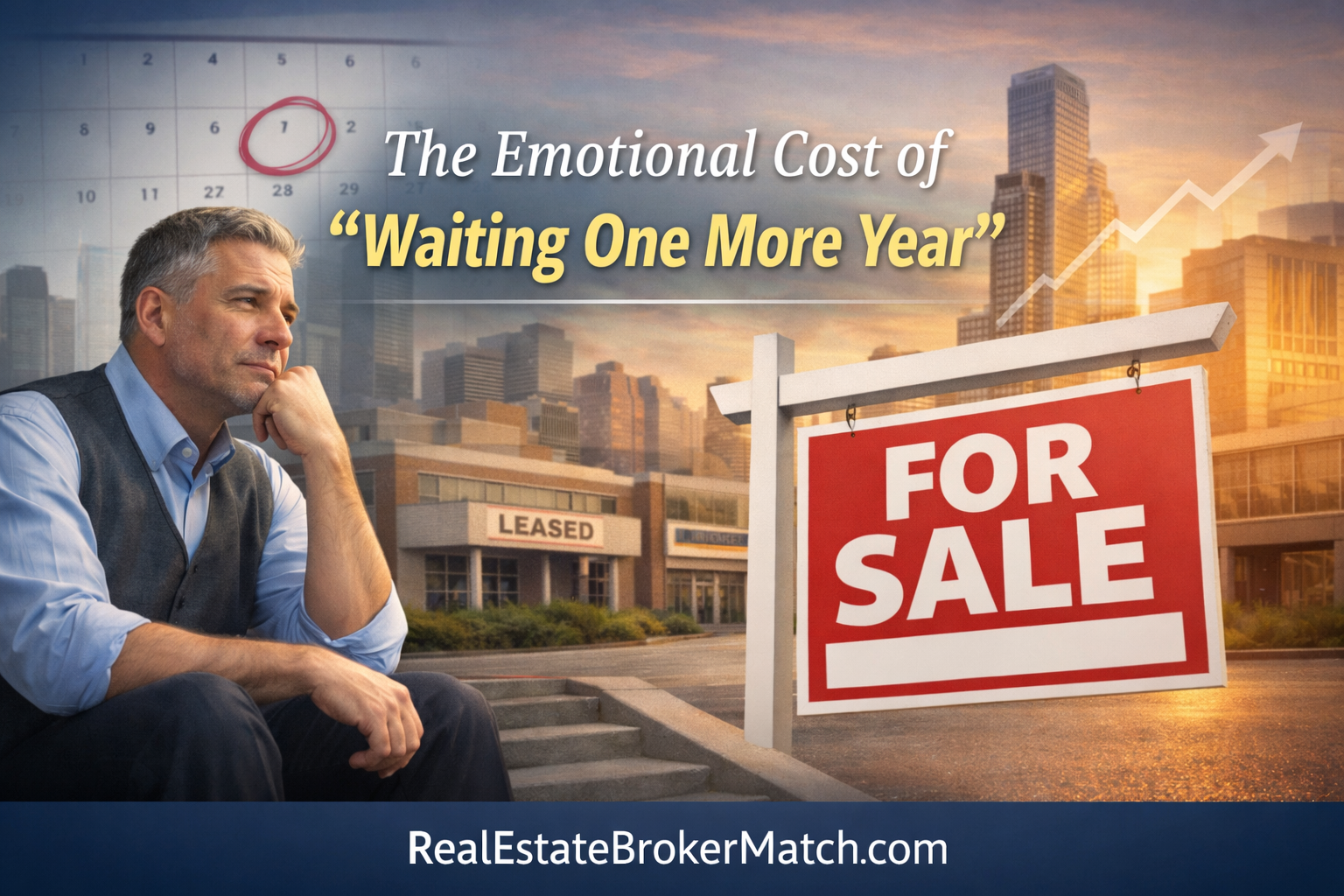
In commercial real estate investing, timing decisions are rarely framed as emotional. Buyers tend to focus on pricing, interest rates, cash flow, tenant demand, and market forecasts. Yet one of the most common and costly decisions buyers make is emotional at its core. Waiting one more year.
Across all asset classes, waiting often feels responsible. It sounds disciplined. Buyers tell themselves they are being patient or cautious. But over time, waiting creates a hidden emotional cost that quietly undermines confidence, clarity, and long-term outcomes.
Understanding that cost is critical for buyers who want to make rational, well-timed decisions rather than staying stuck in analysis mode.
Why Waiting Feels Safer Than Acting
Waiting one more year usually begins with a reasonable justification. Buyers worry about interest rates, pricing cycles, or broader economic uncertainty. They want more confirmation before committing capital.
Whether the asset is retail, multifamily, industrial, office, mixed-use, or net lease, commercial real estate decisions feel significant. These assets are long-term by nature, which makes the act of committing feel permanent even though portfolios evolve.
Waiting becomes a way to avoid discomfort. It postpones the anxiety of making a large decision, which feels calming in the short term but often creates more stress later.
The Quiet Stress of Indecision
Indecision carries weight. Buyers who wait year after year often stay mentally invested without being financially invested. They continue monitoring listings, tracking pricing, and watching transactions close while telling themselves they are not ready.
This creates a constant background tension. Each closed deal becomes a reminder of inaction rather than a learning opportunity. Over time, confidence erodes and future decisions become harder.
What begins as patience slowly turns into self-doubt.
Missed Opportunity Fatigue
Most buyers underestimate how emotionally draining missed opportunities can be. When a buyer passes on a deal and later sees similar assets trade at higher prices, regret quietly sets in.
One missed deal is easy to rationalize. Several missed deals feel different. Buyers begin replaying old listings and wondering what their portfolio might look like had they acted sooner.
This pattern shows up across all asset classes, especially in markets where demand outpaces supply and pricing steadily moves upward.
Waiting Does Not Eliminate Risk
Many buyers believe waiting reduces risk. In reality, it often just changes the type of risk being taken.
Instead of asset level or market risk, buyers take on timing risk. Markets evolve while capital remains idle. Competition increases. Deals that once worked no longer pencil.
This can force buyers to act later from a weaker position, leading to rushed decisions that waiting was supposed to prevent.
The Lifestyle Cost Buyers Rarely Acknowledge
For many buyers, investing is not just about returns. It is about lifestyle. Predictable income, long-term security, and flexibility are core motivations behind commercial real estate ownership.
Delaying a purchase delays those benefits. Buyers remain more dependent on active income longer than planned and postpone the stability that ownership is meant to provide.
Over time, the gap between intention and action becomes emotionally draining.
Why Waiting Becomes a Habit
Waiting one more year easily becomes routine. Each delay reinforces the idea that action can always be postponed.
Markets change, but habits are sticky. Buyers who delay once often delay again, even when conditions improve. At that point, waiting becomes less about market timing and more about comfort with inaction.
Breaking that cycle requires clarity, not more time.
How the Right Guidance Changes the Equation
Many buyers do not need additional patience. They need better information and context.
Asset class and market-specific expertise help buyers separate real risk from perceived risk. Local insight provides nuance that national data cannot. That clarity reduces hesitation and replaces doubt with informed confidence.
With the right guidance, decisions feel intentional rather than rushed.
How Real Estate Broker Match Helps Buyers Move Forward
Real Estate Broker Match helps buyers overcome the uncertainty that fuels hesitation. REBM connects buyers with brokers who specialize in the exact asset class and market they are targeting.
These brokers provide real-time insight into pricing, competition, and deal quality. This allows buyers to evaluate opportunities objectively rather than emotionally.
Instead of waiting indefinitely, buyers gain the confidence to move forward when the right opportunity appears.
Final Thoughts
Waiting one more year rarely feels like a decision. It feels like a pause. But over time, that pause carries emotional weight.
The cost of waiting is not just financial; it also includes emotional and psychological costs. It manifests as stress, hesitation, and a loss of momentum. Acting thoughtfully with the right guidance often brings more peace of mind than waiting ever does.
Visit RealEstateBrokerMatch.com to speak with a broker who understands the market you’re targeting and can help you decide when waiting makes sense—and when it doesn’t.