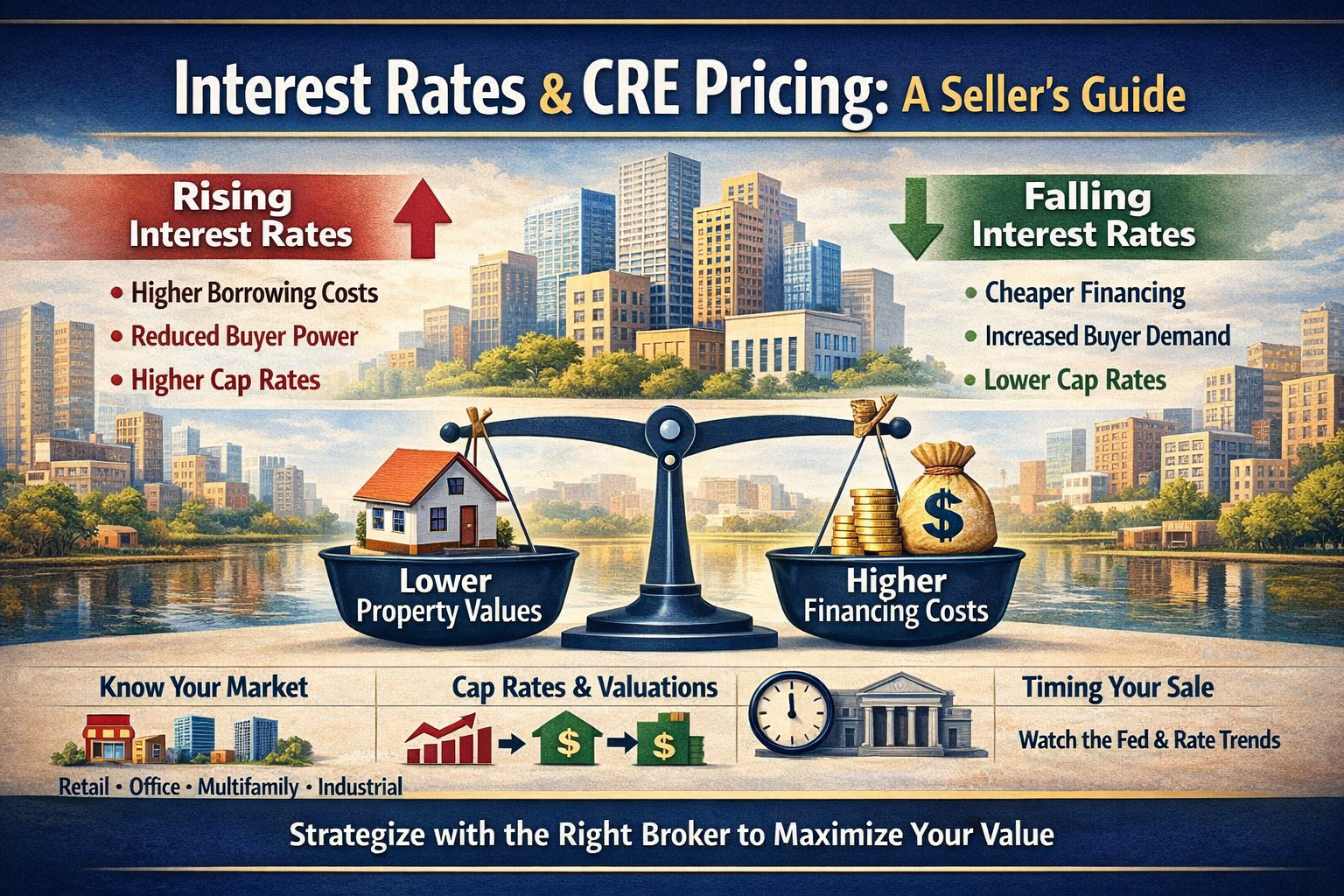
Commercial real estate pricing does not exist in a vacuum. One of the most influential forces shaping property values across all asset classes is interest rates. Whether you are selling retail, office, industrial, multifamily, or mixed-use assets, understanding how interest rates impact buyer behavior and pricing is essential to protecting value and negotiating from a position of strength.
For sellers, interest rate cycles can either create leverage or quietly erode it. Knowing how buyers underwrite deals during different rate environments allows sellers to price assets more strategically, choose the right timing, and work with brokers who understand capital markets rather than just listings.
Why Interest Rates Matter in Commercial Real Estate
Interest rates directly affect the cost of capital. When rates rise, borrowing becomes more expensive. When rates fall, financing becomes cheaper and more accessible. In commercial real estate, where most acquisitions rely heavily on debt, even small changes in rates can materially impact deal economics.
Higher interest rates reduce buyer purchasing power. Monthly debt service increases, loan proceeds decrease, and debt coverage ratios become harder to meet. As a result, buyers often lower their offer prices to maintain target returns. Lower interest rates tend to have the opposite effect by expanding buyer pools and allowing investors to justify higher valuations.
For sellers, this means pricing expectations must align with the current financing environment, not with historical peaks or prior rate cycles.
The Relationship Between Interest Rates and Cap Rates
Capitalization rates are one of the most important valuation metrics in commercial real estate. While cap rates are influenced by many factors, interest rates play a significant role in their movement over time.
In general, rising interest rates put upward pressure on cap rates. As cap rates increase, property values decline if net operating income remains constant. Falling interest rates typically compress cap rates, leading to higher valuations.
Sellers often struggle when they price assets based on outdated cap rate assumptions. Buyers underwrite based on today’s debt terms, not yesterday’s market conditions. Understanding where cap rates are moving, and why, helps sellers avoid pricing themselves out of the market.
How Buyers Underwrite Deals in a Higher Rate Environment
When interest rates are elevated, buyers become more disciplined and conservative. Underwriting assumptions tighten, and sensitivity analyses become more important. Investors focus heavily on in place cash flow, lease durability, and downside protection.
In higher-rate markets, buyers may require higher going-in cap rates, stronger tenant credit, or shorter hold periods. Value add and speculative strategies often slow, while stabilized assets with predictable income attract more attention.
For sellers, this means presentation matters more than ever. Clean financials, realistic rent assumptions, and transparent operating history help buyers gain confidence in underwriting. Sellers who ignore buyer constraints often face extended marketing periods and repeated price reductions.
Interest Rates and Buyer Pool Size
Interest rates also impact who can buy your property. As rates rise, some buyers step to the sidelines entirely. Others shift to smaller deal sizes or alternative asset classes. Institutional investors, private equity groups, owner-users, and 1031 exchange buyers all react differently to rate changes.
A shrinking buyer pool reduces competition, which directly affects pricing and leverage during negotiations. Sellers who understand which buyers are still active can work with brokers to target the right audience rather than marketing broadly without focus.
This is where broker specialization becomes critical. Not every broker understands how capital sources shift across rate cycles. Matching your property with the right buyer profile can preserve value even in challenging markets.
Timing the Sale Around Interest Rate Cycles
While it is impossible to perfectly time interest rate movements, sellers can make informed decisions about when to bring assets to market. Monitoring central bank policy, lending trends, and debt market sentiment provides valuable context.
Some sellers choose to transact before anticipated rate increases to lock in stronger pricing. Others wait for stabilization or easing cycles to benefit from improved buyer confidence. The key is aligning expectations with reality rather than waiting indefinitely for peak conditions to return.
Holding a property too long in a rising-rate environment can result in declining leverage, even if fundamentals remain strong.
Pricing Strategy Matters More Than Ever
In volatile rate environments, pricing strategy becomes one of the most important decisions a seller makes. Overpricing often leads to longer days on market, buyer skepticism, and eventual price reductions. Correctly priced assets tend to attract more interest, generate competition, and maintain negotiating power.
Smart sellers work with brokers who analyze current debt terms, buyer return requirements, and recent comparable sales. Pricing based on what buyers can actually finance today positions a property to transact efficiently rather than stagnate.
How REBM Helps Sellers Navigate Interest Rate Risk
Interest rates affect every commercial real estate transaction, but not all sellers have access to brokers who understand capital markets deeply. At Real Estate Broker Match, sellers are connected with brokers who specialize in their asset type and understand how interest rates influence pricing, underwriting, and buyer behavior.
By matching sellers with the right professionals, REBM helps property owners avoid costly missteps, unrealistic pricing, and prolonged sales processes. In a market where interest rates continue to shape outcomes, having the right broker is not optional.
Key Takeaways for Sellers
Interest rates are one of the most powerful drivers of commercial real estate pricing. Sellers who understand how rates affect cap rates, buyer underwriting, and purchasing power are better positioned to protect value. Aligning pricing expectations with current market conditions and working with brokers who understand capital markets can make the difference between a successful sale and a stalled listing.
Real Estate Broker Match connects sellers with specialized commercial real estate brokers across all asset classes who understand how interest rates impact pricing, buyer demand, and deal execution. To learn more or to get matched with the right broker for your property, visit www.realestatebrokermatch.com.